
Korean Culture in August: National Museum Exhibitions That KPop Demon Hunters Fans Will Love
pdt · 2025. 8. 14.

The globally acclaimed KPop Demon Hunters has captivated audiences by reinterpreting traditional Korean patterns and costumes in a modern way, winning strong praise from international fans.
At the National Museum of Korea, visitors can purchase uniquely Korean merchandise similar to the items featured in the movie, and even see the original swords and artifacts that inspired its characters. This August, the National Museum is hosting a special exhibition where you can fully immerse yourself in Korean culture, exploring its artistry, history, and cinematic connections all in one place.
KPop Demon Hunters Fever and the Rediscovery of Korean Culture
Traditional Motifs in KPop Demon Hunters and Their Real-Life Roots in Korean Culture

The tiger, magpie, traditional gat (Korean hat), and intricate hanbok details featured in KPop Demon Hunters have been winning praise in overseas fan communities and on social media, often described as “authentically Korean charm!”
If you’re a KPop Demon Hunters fan, it’s worth checking out the special Korean cultural merchandise available at the National Museum of Korea before exploring the exhibition. In particular, the film’s tiger character “Duffy” has drawn attention among fans for its resemblance to the museum’s Jak-hodo badge—a design inspired by a traditional tiger-and-magpie painting. This has even sparked a trend among fans saying, “I’m going to the National Museum of Korea just to buy KPop Demon Hunters merch.”
In Korean culture, tigers have long symbolized courage and protection, frequently appearing in traditional folk paintings and legends. Thanks to the film, many foreign visitors are not only discovering these cultural symbols but are also making trips to the National Museum to deepen their understanding of—and fully immerse themselves in—the richness of Korean heritage.
Recommended Korean Cultural Exhibitions for KPop Demon Hunters Fans
Popular Merchandise and Korean Culture at the National Museum of Korea
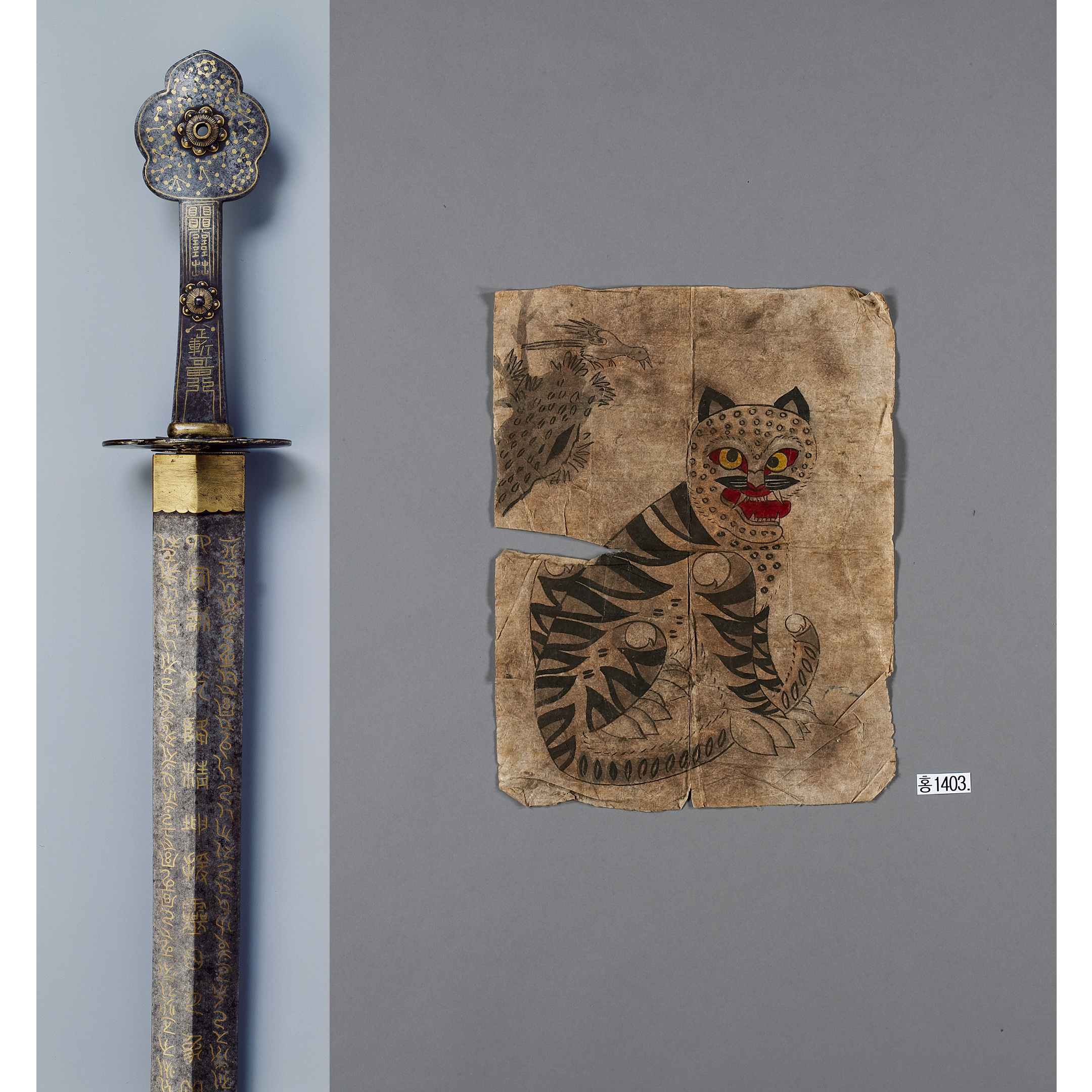
When you visit the National Museum of Korea, you can see an actual Hojakdo—a Joseon Dynasty painting of a tiger and a magpie—that closely resembles the tiger “Duffy” from KPop Demon Hunters. Hojakdo is a traditional folk painting that humorously depicts the tiger and magpie, and it served as the inspiration for the characters “Duffy” and “Soo-ssi” in the film.
You’ll also find a sword similar to the one used by the film’s main character. Known as the Sain-geom, this Joseon-era sword was believed to ward off evil spirits and was used as a ritual object. Seeing the Sain-geom in person and comparing it with the weapon from the movie makes the experience even more engaging for fans.

At the museum’s gift shop, you’ll find a variety of items featuring tiger motifs, such as mugs, notebooks, and eco-bags. However, due to their recent surge in popularity, these goods tend to sell out quickly—so be sure to keep that in mind.
By comparing the imagery from KPop Demon Hunters with the actual artifacts at the National Museum of Korea, you’ll enjoy the unique thrill of discovering the traditional cultural elements that inspired the film’s characters.
💡 Gift Shop Open Hours (Shop 2)
- Location: Central area, 1st floor, Permanent Exhibition HallPhone: +82-2-2077-9771Hours: Mon–Sun, 10:00 a.m. – 6:00 p.m.Closed: New Year’s Day (January 1), Lunar New Year’s Day, Chuseok Day, and the first Monday of April and November each year
Special Korean Cultural Exhibition You Can Experience Only in August
The Historical Significance of August 15th and Korean Culture

The National Museum of Korea hosts a variety of special exhibitions throughout the year, but visiting in August carries a deeper meaning.
August 15 is Korea’s Gwangbokjeol, or Korea's National Liberation Day. In 1945, Korea regained its sovereignty and freedom after decades under Japanese colonial rule. The word Gwangbok literally means “restoration of light,” marking a historic moment when the nation reclaimed its brightness and stepped toward a new future.
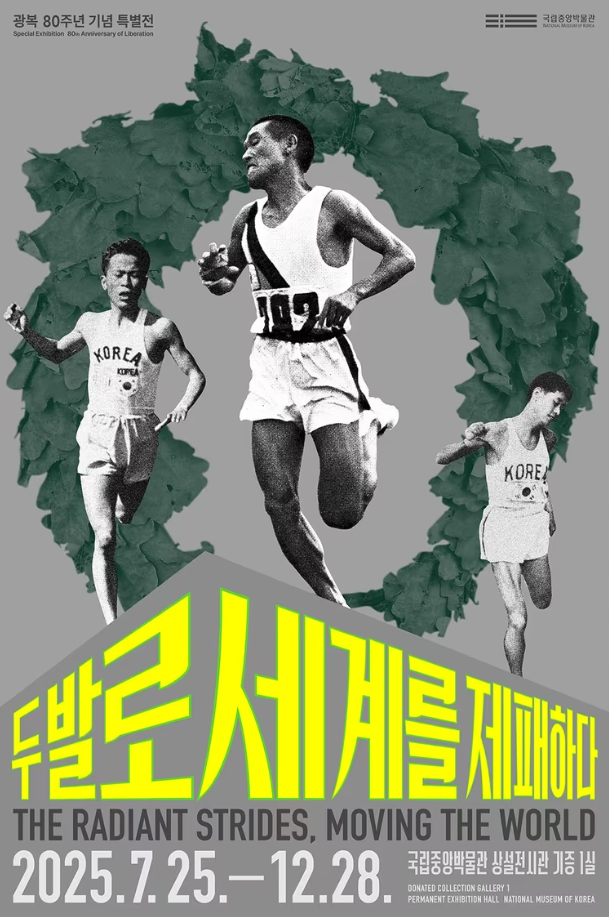
This year marks the 80th anniversary of that historic day, and to commemorate it, the National Museum of Korea is hosting a special exhibition titled “The Radiant Strides, Moving the World”.
Held in the Donation Room 1 on the second floor of the permanent exhibition hall, this is a small but meaningful free exhibition. While its duration is short, it offers visitors a deeply insightful look into Korean history.
80th Liberation Anniversary Special Exhibition: “Conquering the World on Two Feet”
Learning Korea’s Independence History Through a Special Cultural Exhibition

This exhibition vividly tells the story of the great strides of Son Kee-chung, who ran in the 1936 Berlin Olympics with the name of Korea engraved in his heart, as well as the achievements of his students who carried on his spirit.
The exhibition’s title was inspired by the four-character idiom Jokpae Cheonha (족패천하), which literally translates to “Conquering the World on Two Feet.” The word jok (족) means “foot,” while pae cheonha refers to “dominating the world.”
During the Japanese colonial period, Son Kee-chung was forced to compete under the Japanese flag, but he always emphasized his Korean identity, even signing his name in Hangul. Jokpae Cheonha symbolizes his courage and determination to remain true to himself and to his homeland.

The exhibition vividly showcases Son Kee-chung’s gold medal moment at the Olympics, the achievements of his students who carried on his legacy, and the torch relay of the 1988 Seoul Olympics. Through personal belongings, photographs, and competition footage, it offers a powerful glimpse into not only the spirit of sports but also the pride of a nation and its longing for independence.
Visiting this exhibition in honor of Korea’s Liberation Day will give you an even deeper appreciation of the country’s modern history and cultural values.
💡Opening Hours
- Mon, Tue, Thu, Fri, Sun: 10:00 a.m. – 6:00 p.m. Last admission: 5:30 p.m.
- Wed, Sat: 10:00 a.m. – 9:00 p.m. Last admission: 8:30 p.m.
Fully Immerse Yourself in Korean Culture at the National Museum of Korea
💡 Tips for International Visitors 🏛 The National Museum of Korea offers docent-led tours in English, Chinese, and Japanese, making it easy for international visitors to understand the exhibition content.These tours are available at 10:30 a.m. and 1:00 p.m. on both weekdays and weekends. No reservation is required—simply head to the front of the Korean Empire section on the first floor of the permanent exhibition hall. Weekday visits are recommended, as they tend to be less crowded than weekends.
🖼 For the best experience, start your visit in the permanent exhibition hall and explore in chronological order—Prehistoric/Ancient → Medieval → Early Modern → Modern → Contemporary. Then, head to the second floor for the Liberation Special Exhibition before stopping by the gift shop.
🌳 Don’t miss the outdoor grounds of the museum, where you can enjoy views of Namsan Tower and the scenic Mirror Pond.

Please note that popular merchandise often sells out quickly, so arriving early gives you the best chance to see and purchase them. If you plan to drive, be aware that parking can be limited.
Taking the subway is recommended—get off at Ichon Station (Line 4), and you can walk straight to the museum from Exit 2. For directions, please refer to the [Getting Here link].
If you’re a KPop Demon Hunters fan, make sure to visit the National Museum this August. You’ll get to see which artifacts inspired the film and how they were woven into its story, experiencing Korean culture in depth. Timed to coincide with Liberation Day, this special exhibition offers a rare chance to enjoy history, art, and tradition all at once—don’t miss it.
